Class C vs. Class A Motorhome: What Sets Them Apart
Quick take
- Shared Features and Living Amenities
- Structural Design and Appearance
- Driving Dynamics and Handling
- Interior Space, Layouts, and Towing Capacity
- Cost Considerations and Final Verdict
When exploring motorized recreational vehicles, Class A and Class C motorhomes stand out as two of the most popular choices for travelers seeking self-contained comfort on the…
When exploring motorized recreational vehicles, Class A and Class C motorhomes stand out as two of the most popular choices for travelers seeking self-contained comfort on the open road.
While both serve as fully functional homes on wheels, they are built on distinct chassis styles, offer different driving experiences, and cater to distinct types of RVers. Choosing between them comes down to understanding how their shared features compare to their fundamental structural and operational differences.
Shared Features and Living Amenities
At their core, Class A and Class C motorhomes share a primary purpose: delivering a complete living space integrated directly into a motorized chassis. Neither requires a tow vehicle to transport, and both come equipped with essential living amenities. In either class, travelers enjoy private bathrooms, functional kitchens with refrigerators and cooktops, dedicated sleeping areas, and climate control systems.
Both types typically feature slide-out sections to expand interior living space when parked, aboard generators for off-grid power, and fresh, gray, and black water tanks to support dry camping.
Structural Design and Appearance
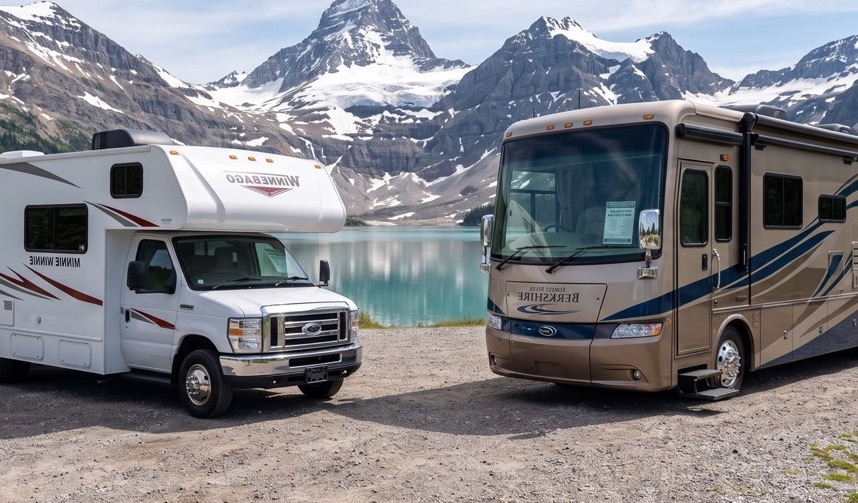
The primary differences begin with their construction and visual profile. A Class A motorhome is instantly recognizable by its flat, vertical front profile, resembling a commercial bus. Built on either a heavy-duty commercial truck frame or a custom diesel pusher chassis, Class A units maximize interior volume from bumper to bumper.
In contrast, a Class C motorhome is built on a standard van or truck chassis, retaining the original driver cab and engine hood. The defining visual characteristic of a Class C is its distinctive over-cab alcove, which typically houses an extra sleeping berth or entertainment center.
Driving Dynamics and Handling
Driving dynamics mark another major point of divergence. Because a Class C motorhome utilizes a standard truck or van front end, the driving position, dashboard controls, and pedal placement feel familiar to anyone accustomed to driving a full-size passenger vehicle. It also features standard driver and passenger doors for easy entry and exit, along with built-in crumple zones ahead of the cabin for added collision safety.
Driving a Class A, however, feels much more like operating a bus. The driver sits higher off the road behind a massive panoramic windshield with wide sightlines, but maneuvering tight turns, navigating gas stations, and managing crosswinds require a steeper learning curve and greater attention to blind spots.
Interior Space, Layouts, and Towing Capacity
Interior space, luxury options, and storage capacities further separate the two classes. Class A motorhomes generally range from 26 to over 45 feet in length, providing taller ceiling clearances, residential-sized appliances, larger holding tanks, and vast pass-through storage compartments beneath the living floor.
Class C units usually span 20 to 32 feet, offering a slightly tighter footprint, though their clever use of space—particularly the bonus bed over the cab—makes them remarkably efficient at sleeping larger families. Additionally, Class A rigs generally boast higher towing capacities, making them ideal for pulling larger vehicles or heavy trailers.
Cost Considerations and Final Verdict
Financially, Class C motorhomes tend to be more accessible for buyers on a budget, carrying lower sticker prices, lower insurance costs, and more accessible maintenance options since standard automotive mechanics can work on their commercial truck engines. Class A motorhomes carry higher upfront purchase prices, steeper fuel demands, and specialized maintenance requirements, particularly for diesel pusher models.
Ultimately, travelers seeking maximum luxury, vast storage, and panoramic views often lean toward a Class A, while those prioritizing familiar driving mechanics, family-friendly sleeping layouts, and lower overall costs usually find their ideal fit in a Class C.
Specs, pricing and availability can change by model year and dealer. Always confirm with the manufacturer and match the rig to your tow vehicle's ratings.